

The Stanford Prison Experiment
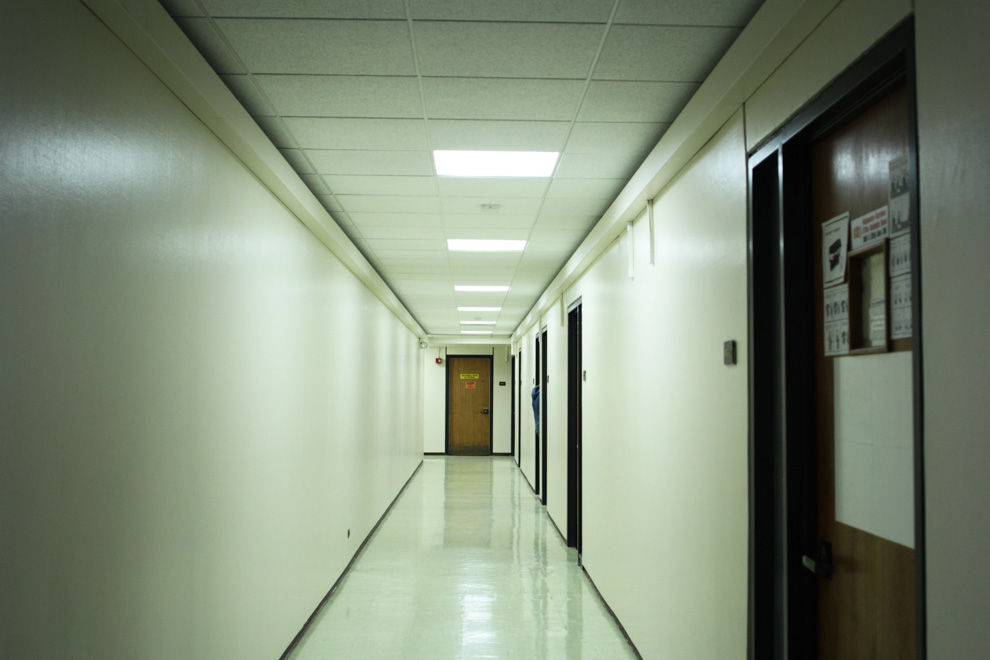
The Stanford Prison Experiment was an experiment executed by Dr. Philip Zimbardo on Stanford’s campus in August 1971. The experiment was originally intended to be a two week study on the social effects and dynamics of imprisonment and the prison system as a whole. Unfortunately, due to the dramatic and detrimental effects had in the first 5 days, the experiment was cut short and dismantled; it is now infamous for the vile situation it created. Taking from those who responded to an ad in the paper they selected 9 men to act as the prisoners and 12 to act as guards (3 shifts of 3 guards and 3 back-ups). These men were promised compensation for the experiment with each of them being paid $15/day over the two weeks. The experiment was notably funded by the Office of Naval Research in order to study antisocial behavior, which is why a relatively large amount of money was offered. The prison was constructed in one of the basement hallways of Stanford’s Jordan Hall, the Psychology building, and was isolated from the paths of the graduate students and professors who may interrupt the experiment. Dr. Zimbardo took on the role as the prison’s Superintendent and used his current graduate students and a former prisoner as consultants in constructing and running his prison. The experiment began promptly at 9:55 A.M. on Sunday August 14, 1971 as Dr. Zimbardo drove along with two Palo Alto Police officers, arresting the participants and taking them to be booked into the “Stanford County Prison”.
Sunday: Booking
On Sunday August 14 Dr. Zimbardo arrived at the Palo Alto Police station expecting to have police waiting to assist him, as was previously promised to him by Chief Zurcher of the department. Unfortunately, due to miscommunication and Zurcher’s absence, there was no such group waiting for him. Dr. Zimbardo employed a slight bit of social manipulation, promising screen time to the Palo Alto policemen that aided in the arrest of the participating prisoners. The reluctant agreement led to video such as that in the previous paragraph being captured as the participants were rounded up one-by-one. The arrests of three of the 9 prisoners is detailed in the narrative; Prisoner 8612 (Doug Karlson, the man seen in the linked video of the arrests), Prisoner 7258 ( Hubbie Whittlow, a recent high-school graduate attending Berkley after the experiment), and Prisoner 2093 (Tom Thompson, a socially awkward, rigid, militaristic type Stanford Student who had spent the summer living in his car and attending summer school). Each of these arrests reflect the respective personalities of the prisoners and provide a comparison for how the experiment changes them over time. Doug is a a recent Berkley graduate and a vehement anti-war advocate who very nearly went to prison for organizing a rally the previous year; he is strong willed and anti-establishment. Hubbie is young and enamored with his high-school girlfriend; he is immature and free-spirited. Tom, who quickly earns the nickname of “Sarge” is so compliant that he seems to take enjoyment from the punishment in the coming days; he shows a will to submit, but paints a key portrait of the line between authoritative action and torture. After being booked into the prison all 9 prisoners are stripped naked, deloused, and separated into their respective cells (three converted rooms with three men to a cell, each man having a cot of his own). The rules are explained to the prisoners as a whole and they go through their first set of “counts” as a prison in which they are required to sound off. As the day shift turns over to the night shift the derivations of counts begins and the guards begin to establish dominance by asking prisoners to count in ludicrous ways (backwards, by room, by height, by weight) and punish them with push-ups for any mistakes. The beginnings of resentment are seen in the prisoners as they comply, and are worsened when the morning shift has their counts, waking them all from a dead sleep at 2:30 A.M. With the immediate brutalization, it is no wonder that Monday starts a long list of rebellion within the Stanford Prison.
Monday: Rebellion
Beginning with a wake-up call at 6 A.M. the prisoners are at the mercy of the morning shift guards; Correctional Officers Vandy, Ceros, and Varnish. Being as there were no toilets in the basement hallway, all prisoners must be taken one-by-one to use the facilities on a separate level. Prisoner 819 (Stewart) finds these new rules funny and is the first prisoner placed in solitary or “The Hole” (a converted file closet) due to his behavior. While inspections are taking place in the cells Officer Vandy and Prisoner 8612 (Doug) scuffle after Vandy tears the covers off of 8612’s newly made cot. This scuffle earns 8612 placement in The Hole as well and it is here that they begin to plan their personal rebellion against their oppressors. Before either 819 or 8612 are able to enact their plan the first act of rebellion is made by the occupants of Cell 1- Prisoner 5704 (Paul), Prisoner 7258 (Hubbie), and Prisoner 3401 (Glenn). Cell 1 has barricaded themselves in their cell, preventing guards from being able to enter. The guards frustrations are borne onto Cell 2 and both Prisoner 8612 and 819 and their cellmate Prisoner 1037 (Rich) have their cots taken out by the guards into the yard (the hallway). The guards begin using fire extinguishers to subdue prisoners with jets of carbon dioxide and remove the cots from Cell 3 as well (though Cell 3 willingly submits their bed to the guards). Rebellion continues as Cell 1 plans an escape and Cell 2 has both Prisoner 8612 and 1037 thrown into The Hole for refusing to cooperate. After this madness, a grievance board is constructed and meets with Dr. Zimbardo who, in true fashion of his role, assures that the concerns of the prisoners will be dealt with assuming their compliance with the rules. Prisoner 8612 does not believe this and demands violently to see Dr. Zimbardo personally saying that he wants to leave. While meeting with Dr. Zimbardo Prisoner 8612 is berated by Carlo Prescott, a former prisoner, for being so “soft” in the first day and Dr. Zimbardo suggests that prisoner 8612 act as an informant to help reduce the hassling done to him by the guards, which only seems to worsen Prisoner 8612’s outlook. After returning voluntarily to the prison Prisoner 8612 begins to spout delirious statements about an inability to leave, and ultimately is put into The Hole again where he screams maniacally. After his release from solitary he is assessed by Craig Haney, a graduate student in Psychology, who suggests that he is unfit to continue the experiment and will be released home.
Tuesday: Visitors and Rioters
Tuesday begins and continues in a similar manner to Monday with increasingly deranged counts, and additional monotonous routine imposed by the guards on the prisoners. Prisoner 8612 (Doug) is replaced by David, another graduate student who, it is hoped, will act as the informant in the prison. However, evidenced by his refusing to inform of another prisoner stealing handcuff keys, it can quickly be seen that David has taken the role as prisoner, and not informant. The prisoners are allowed to write a second round letters out to friends and family who are unable to visit them, before they are then groomed and instructed to prepare the prison for the impending visitors; the family in the area. The letters written are vetted before being sent, and it is found the Prisoner 5704 (Paul) is intending to write a piece for several guerrilla newspapers about the experiment and its use as a “government funded experiment on detaining anti-war protesters”; this angers Dr. Zimbardo who states that he has begun to feel the need to “protect my prison”. Dr. Zimbardo is not the only one whose identity is beginning to slip; as guards come on and off their shifts they express more disdain for the “prisoners and their prison stink” and take more and more pleasure in tormenting their captives during their counts. Once the whole of the prison is prepared for the night, the first visitors arrive. Prisoner 819 (Stew) is the first to visit with his family. The visits are closely monitored by the guards and many guests (including Stew’s parents) choose to remain purposely distant and keep their appearance short. The mother of Prisoner 1037 (Rich) begins to raise a fuss that she feels her son may be becoming depressed to Dr. Zimbardo who, losing himself in his role as Superintendent, convinces the mother with the help of her husband that “your son can take it”. This tactic of challenging masculinity works exceedingly well on reinforcing continuation in the study. After the visiting night is over the prison prepares for a suspected attack by Doug (the former Prisoner 8612) and his friends, a rumor that has been circulating since Doug’s release the previous night. To dissuade rioters the prisoners are taken with bags placed over their heads and stored in a lecture room on the third floor as Dr. Zimbardo waits in a destroyed prison yard for the rioters. These rioters turn out to be nothing more than rumor, and the prisoners are brought back and placed in their cells.

Wednesday: Control Begins to Spiral
Wednesday follows the same scaffolding of the two previous days with one major exception; a priest has been brought in for religious counseling at request of the grievance board. This priest, Father McDermott, is used to serving in prisons and feels that he can add to the realism of the situation. The meetings with Father McDermott are uncomfortably real as prisoners speak, and are spoken to, as if their situation is much more permanent and real than it actually is; the experiment has now taken root in nearly all participants as a sort of accepted reality. This is especially visible in the reactions of Prisoner 819 (Stew). In a fit of rage this morning 819 destroyed his pillow, raining feathers all about his cell (which he was then forced to clean). During his meeting with Father McDermott Prisoner 819 breaks down sobbing, stating that he is stressed, anxious, and has a headache. Dr. Zimbardo collects him from Father McDermott and lets him sit in a quiet room while attending to some other work. During this time Officer Arnett begins instructing the prisoners in a chant of “Prisoner 819 did a bad thing” and “Prisoner 819 is being punished”. Returning to Prisoner 819, Dr. Zimbardo finds him huddled over continuing to sob, stating that he wants to return to the experiment to prove that he is not a “bad prisoner”. Dr. Zimbardo focuses on the odd instance in which he assure Stew that he is not Prisoner 819 and the sudden snap to awareness (“as if he was a child awakening from a nightmare”). After this breakdown it is decided the Stew can no longer continue the experiment and he is released.

In replacement for Stew a new prisoner, Prisoner 416 (Clay), is brought into the study. While at lunch Clay, observing the terror that he has been placed into, absolves to resist his abusers by going on a hunger strike, grasping the two sausages from his meal in defiance. This act is infuriating to the guards and they place him in The Hole and threaten the entirety of the prisoners; if Prisoner 416 does not eat they will not be able to have their scheduled visitors. This threat is found to be baseless, but still promotes animosity among the prisoners; their actions affect the whole. After visitors the guards play a new game; they force the prisoners into different behaviors and scenarios. Officer Hellman is the primary perpetrator of this, insisting that the prisoners act out scenes (such as Frankenstein and the Bride of Frankenstein) and requesting they engage in and say homoerotic things to each other. The further that he is able to push the prisoners, the more perverse his orders become. Ultimately, these behaviors are stopped when Prisoner 2093 (“Sarge”) states that he will not participate as the behavior is “kind of obscene”. Officer Hellman continues to promote inter-prisoner violence as he orders them to demean and threaten Prisoner 416 (who still refuses to eat his sausages). Prisoner 2093 yet again refuses, and stands firm in his moral identity. The antics to try and crack Prisoner 416 continue as he is subjected to more solitary confinement, verbal abuse, and serves as the catalyst for all of the prisoners being offered dirty, burr covered blankets unless 416 yields; none of these tactics work however as the prisoners have bonded against their oppression in a way. An amazing thing to know is that, although there is a “parole” meeting held this day with the offer to leave the experiment without compensation, no prisoner takes this offer, stating in later interviews that “we didn’t even think of it as an experiment anymore…it was a prison run by psychologists”.
Thursday: Confronting the Demons
Thursday serves as a primary turning point in the experiment; it is the day that Dr. Zimbardo comes to the realization that his actions are having a legitimately damaging effect on himself and the prisoners. Christina, a graduated PhD in Social Psychology (and lover to Dr. Zimbardo) takes up work on the project only to find that the conditions have become increasingly sadistic. Using her position as both a colleague and loved one of Zimbardo she presents the reality of the situation and pleads that the experiment be stopped prematurely. By this point two additionally inmates have been deemed psychologically unfit to continue, and another discharged for medical reasons (a large rash). Dr. Zimbardo, taking Christina’s advice, decides that he will close down the experiment the next morning. Unknown to Dr. Zimbardo at the time, this last night is the most profoundly disturbing in terms of guard behavior. Officer Hellman has progressed to having the prisoners simulate sodomizing one another as “female and male camels”. This extreme change, in only four days, has to do in part with the fact that Hellman is the largest of the night guards and has thus taken position in the hierarchy.
Friday: Breaking Down the Institution
Friday is the end of the experiment. After an innocuous count the prisoners and guards are informed that their roles have finished. The rush of joy on the part of the prisoners is immense and the resentment felt by the guards is (even to themselves) quite strange. The experiment, after only 5 days, had elicited behavior that was so repulsive many of the participants needed therapy following their finishing. It is, in many ways, a painting of how one may be seduced into behaving in an evil way.
 A Peek Inside